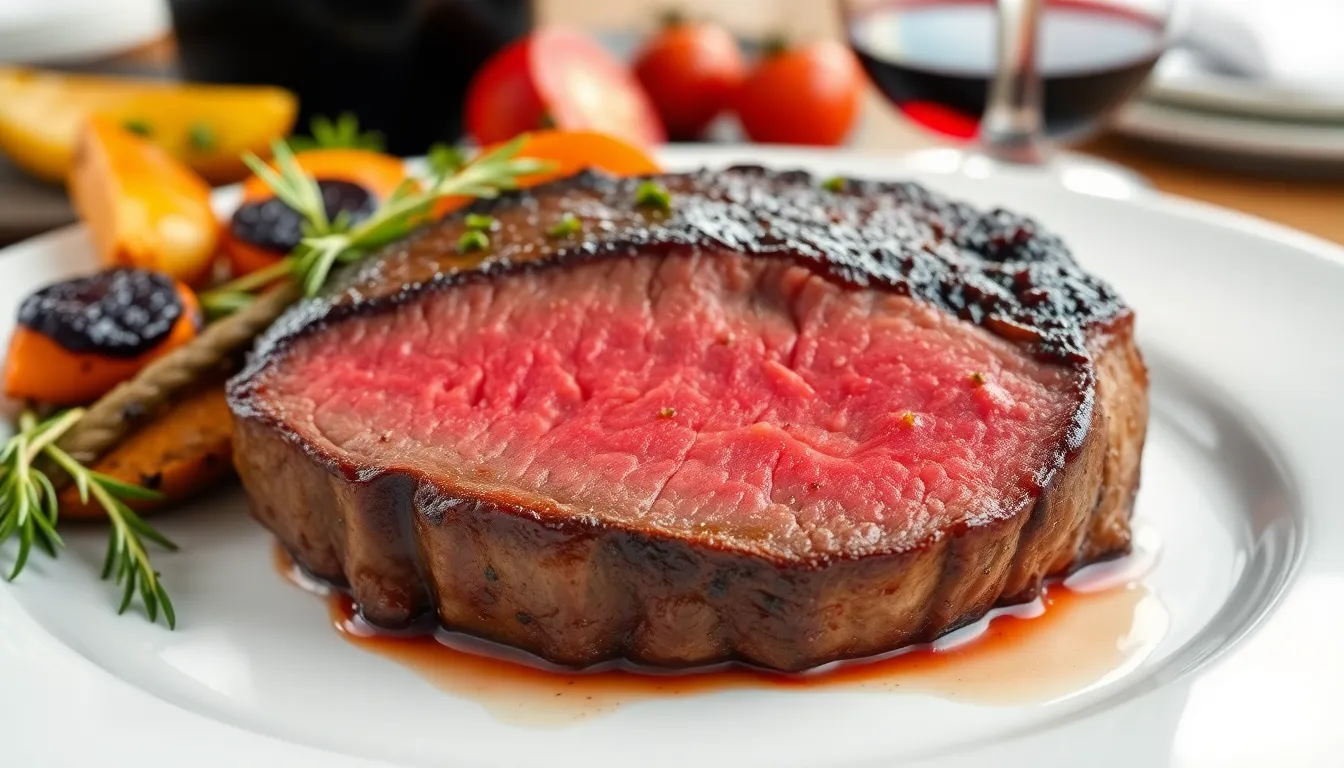
When it comes to steak, few cuts can rival the succulent tenderness of a filet mignon. But let’s be real—cooking it to the perfect medium rare is where the magic happens. Imagine sinking your teeth into a juicy slice, the rich flavors dancing on your palate like a well-rehearsed ballet. But if you’re not careful, you might end up with a steak that’s more shoe leather than culinary delight.
Understanding Medium Rare Filet Mignon Temp
Medium rare filet mignon offers a balance of flavor and tenderness, making it a favorite among steak lovers. Achieving the ideal temperature is crucial for this cut of meat.
The Science Behind Cooking Temperatures
Cooking meat involves proteins altering their structure due to heat. At specific temperatures, distinct changes occur. For instance, proteins begin to denature around 140°F, resulting in a juicy and flavorful texture. The process continues until the meat reaches higher temperatures, where dryness often occurs. Notably, medium rare lies between 130°F and 135°F, ensuring moisture retention while still allowing for proper safety guidelines.
Recommended Internal Temperature for Medium Rare
For filet mignon cooked to medium rare, the recommended internal temperature ranges between 130°F and 135°F. Monitoring this range guarantees a pink center with excellent juiciness. Using a meat thermometer provides an accurate reading, reducing chances of overcooking. After reaching the desired temperature, resting the steak for several minutes allows juices to redistribute, enhancing overall flavor. Following these guidelines leads to a consistently satisfying dining experience.
Preparing the Perfect Filet Mignon
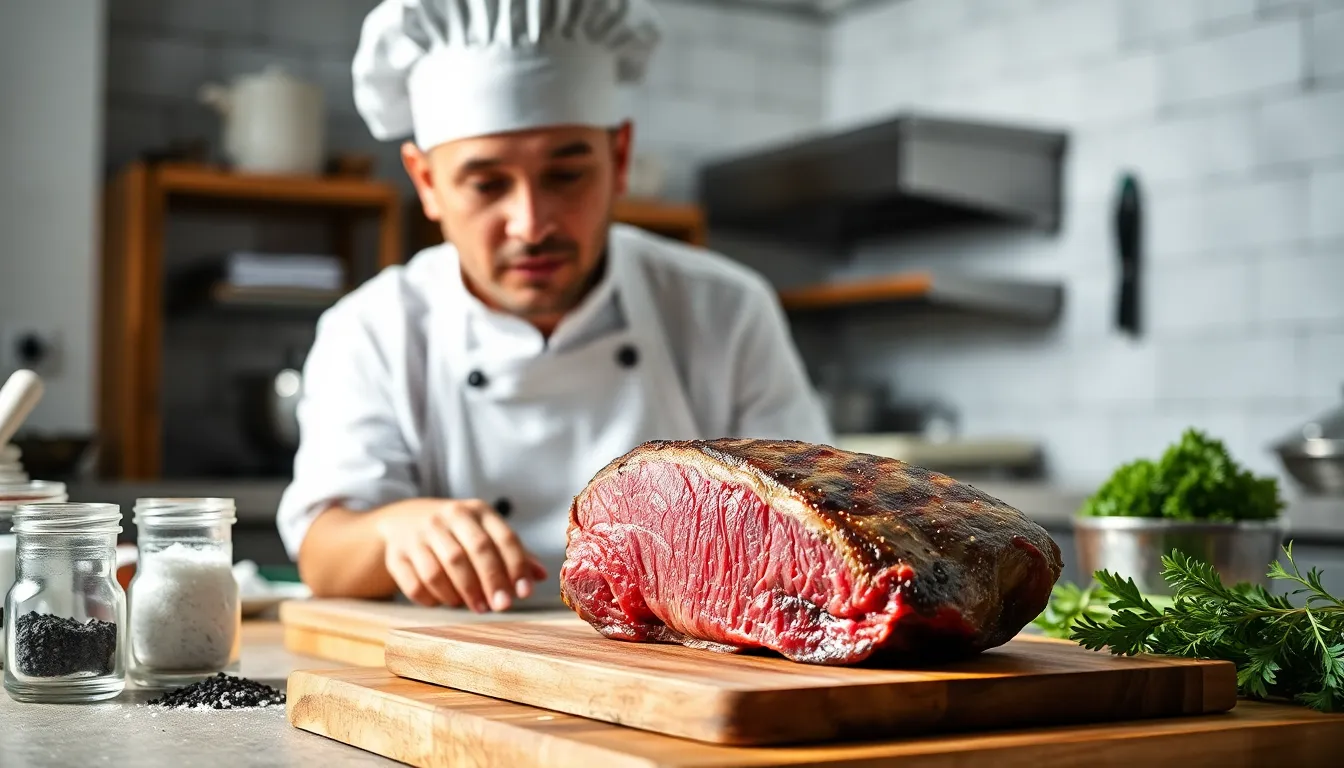
Perfecting filet mignon requires careful attention to detail. Key aspects include selecting the right cut and employing effective seasoning techniques.
Selecting the Right Cut
Choosing the appropriate cut significantly influences the final dish. Opt for filet mignon that showcases a bright red hue and even marbling for optimal flavor and tenderness. Look for cuts that are at least 1.5 inches thick, as these will yield better cooking results. Freshness is vital; check for a firm texture and no off-putting odors. Consider asking your butcher for prime or choice grades, as these classifications promise superior quality. With the right cut in hand, preparing filet mignon becomes an easier task.
Seasoning Techniques
Seasoning enhances the natural flavors of filet mignon. Begin with a simple blend of kosher salt and freshly cracked black pepper, allowing the meat’s richness to shine. For added depth, utilize garlic powder, onion powder, or paprika in moderation. Apply seasoning generously, covering all sides for maximum flavor absorption. Allow the seasoned steak to sit at room temperature for about 30 minutes before cooking; this step promotes even cooking throughout. Experimenting with marinades or herb butters can elevate the dish while maintaining the filet’s inherent qualities.
Cooking Methods for Filet Mignon
Cooking filet mignon to perfection involves several effective methods. Each technique enhances the flavor and tenderness of this premium cut.
Grilling
Grilling offers a delightful smoky flavor to filet mignon. Preheat the grill to medium-high heat, ensuring even cooking. Season the steak with salt and pepper just before placing it on the grill. Cook for 4 to 5 minutes per side for medium-rare doneness, monitoring the internal temperature. An instant-read thermometer should register between 130°F and 135°F. Resting the steak for several minutes allows juices to redistribute, resulting in a succulent bite.
Pan-Searing
Pan-searing focuses on achieving a perfect crust on filet mignon. Start with a heavy skillet over high heat and add a small amount of oil. Once the oil shimmers, place the filet in the skillet. Sear for about 3 to 4 minutes on each side for a medium-rare finish. Using butter and aromatics, like garlic and thyme, while searing can enhance flavors further. Remember to check the internal temperature for accuracy and let the steak rest afterward.
Oven Roasting
Oven roasting provides consistent results for filet mignon. Preheat the oven to 400°F and sear the steak in a hot pan for 2 to 3 minutes on each side. After searing, transfer the skillet to the preheated oven. Roast for approximately 5 to 7 minutes to reach the desired medium-rare temperature. Using a meat thermometer ensures precision. Always let the filet rest prior to serving, which intensifies the juiciness and flavor.
Checking for Doneness
Achieving the perfect doneness for filet mignon requires attention and precision. Several methods assist in determining when the steak reaches the desired internal temperature.
Using a Meat Thermometer
A meat thermometer serves as a reliable tool to monitor cooking progress. For medium rare, the target internal temperature ranges between 130°F and 135°F. Insert the thermometer into the thickest part of the steak to obtain an accurate reading. It’s crucial not to touch any bone or fat while measuring, as this may lead to incorrect results. Once the thermometer indicates the desired temperature, remove the steak from the heat source to prevent overcooking. Allow the filet mignon to rest briefly, as this step helps retain its juices.
Visual Cues to Look For
Visual indicators provide additional insights into a steak’s doneness. A properly cooked medium rare filet mignon features a warm, pink center along with grill marks or a nicely seared crust. Pressing gently on the surface reveals a soft, slightly yielding texture, indicating ideal doneness. Additionally, juices should emerge as a light pink hue, suggesting readiness. Observing these cues enhances the likelihood of serving a perfectly cooked filet mignon.
Tips for Serving Medium Rare Filet Mignon
Serving medium rare filet mignon elevates any dining experience. Achieving the perfect pairing with sides and sauces enhances the dish’s flavors.
Pairing with Sides and Sauces
Select sides that complement the filet mignon’s rich flavors. Roasted vegetables like asparagus or Brussels sprouts provide freshness. Creamy mashed potatoes or loaded baked potatoes add comfort and richness. Choose sauces such as red wine reduction or béarnaise to enhance the meat’s taste. Truffle butter or garlic herb butter offers an indulgent finishing touch. Each side and sauce should balance the dish, ensuring a harmonious meal.
Presentation Suggestions
Presentation plays a crucial role in showcasing filet mignon. Begin by placing the steak at the center of the plate. Add vibrant sides around the steak; colorful vegetables draw attention. Drizzle sauces artistically for visual appeal. Garnishing with fresh herbs elevates the presentation further. Serve alongside a glass of red wine to enhance the dining experience. Focus on height and color to create an inviting and visually stunning plate.
Achieving the perfect medium rare filet mignon is an art that elevates any dining experience. By understanding the ideal cooking temperature and employing the right techniques, anyone can serve a steak that’s tender and bursting with flavor. The importance of selecting high-quality cuts and proper seasoning cannot be overstated, as these factors significantly influence the final dish.
Whether grilling, pan-searing, or oven roasting, attention to detail ensures a beautifully cooked filet mignon. With the right accompaniments and thoughtful presentation, this exquisite cut of meat can truly shine on any table. Embracing these guidelines will not only impress guests but also create lasting culinary memories.